
Closing Entries in Accounting: What Are They & Examples

This should match the withdrawal from your business’s bank account or equal the amount that the owners are contributing to the business to complete the purchase. Add this amount to your journal as a credit pointing to either the bank or appropriate owner equity account. At closing you’ll receive credit for any earnest money deposit that you made for the purchase.
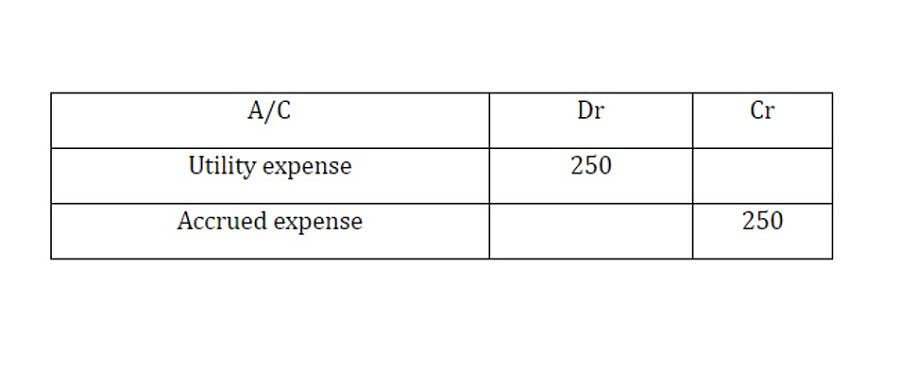
Important Adjusting Entries With PDF
This QuickBooks transaction will cancel the value in the temporary account and bring its ending value to zero, allowing the account to be closed out for the period. An opposite entry will be made in a permanent account to allow for an overall assessment of the business’s financial status. There are four closing entries; closing revenues to income summary, closing expenses to income summary, closing income summary to retained earnings, and closing dividends to retained earnings. Both methods are correct with each having its advantages and disadvantages.
Example 5: Adjusting for Depreciation Expense
Finally the dividends account may be closed through a debit to the retained earnings account and credit to the dividends account. The closing entries are then posted to the ledger accounts by the company. Companies usually create closing entries directly from the ledger’s adjusted balances. Companies generally journalize and post-closing entries only at the end of the annual accounting period, in contrast to the steps in the cycle. I know that closing entries are crucial for preparing our financial records QuickBooks Accountant at the end of an accounting period.
Example 2: Closing Expense Accounts

As an experienced accountant, I’ve seen firsthand how crucial closing entries are for maintaining accurate financial records. Retained earnings normally have a credit balance, increasing with net income and decreasing with dividends or losses. Manually creating your closing entries can be a tiresome and time-consuming process. And unless you’re extremely knowledgeable in how the accounting cycle works, it’s likely you’ll make a few accounting errors along the way. Now, it’s time to close the income summary to the retained earnings (since we’re dealing with a company, not a small business or sole proprietorship). Keep in mind, however, that this account is only purposeful for closing the books, and thus, it is not recorded into any accounting reports and has a zero balance at the end of the closing process.

Printing Plus has a $4,665 credit balance in its Income Summary account before closing, so it will debit Income Summary and credit Retained Earnings. The income statement summarizes your income, as does income summary. If both summarize your income in the same period, then they must be equal. However, if the company also wanted to keep year-to-date information from month to month, a separate set of records could be kept as closing entries the company progresses through the remaining months in the year. For our purposes, assume that we are closing the books at the end of each month unless otherwise noted.
- At the end of the period, you move these balances into a holding account called income summary.
- At the end of the year, it needs to be zeroed out by debiting it and crediting the Income summary account.
- For instance, the year 2020 revenue and expense accounts would show the balances pertaining to just that year and not for 2019 or 2018.
- If your property was financed, a large portion of the final payment will have been made on your behalf by your lender.
- It automates the reconciliation process, flagging any unbalanced accounts as transactions come in.
- In accounting terms, these journal entries are termed as closing entries.
- Typically, adjusting entries are made to account for things like accrued revenue and expenses, prepaid expenses, and unearned revenue.