
Understanding the Basics of Forex Trading 1679077297

Forex trading, or foreign exchange trading, has gained immense popularity in the financial market world. It represents one of the largest financial markets globally, with an average daily trading volume exceeding $6 trillion. For those eager to start their journey in this dynamic arena, it’s crucial to understand some basic concepts. In this article, we will explore the fundamentals of Forex trading, covering everything from currency pairs to essential trading strategies. For deeper insights and tools, check out forex trading basics https://forex-level.com/.
What is Forex Trading?
Forex trading involves exchanging one currency for another, aiming to profit from the fluctuations in their exchange rates. It’s a decentralized market, meaning there is no centralized exchange; rather, Forex operates through an electronic network of banks, brokers, institutions, and individual traders.
Currency Pairs
In Forex trading, currencies are traded in pairs. Each pair consists of a base currency and a quote currency, denoted as follows: EUR/USD. In this example, EUR is the base currency, and USD is the quote currency. The price of the pair indicates how much of the quote currency is needed to purchase one unit of the base currency.
There are three types of currency pairs:
- Major Pairs: These include the most traded currencies globally, such as EUR/USD, USD/JPY, and GBP/USD.
- Minor Pairs: These are less commonly traded and don’t involve the USD, such as EUR/GBP or AUD/NZD.
- Exotic Pairs: These pairs involve a major currency and a currency from an emerging market, like USD/TRY (Turkish Lira).
Market Participants
The Forex market consists of various participants with different objectives, including:
- Central Banks: They implement monetary policies and often intervene in the Forex market to stabilize or increase the value of their currency.
- Financial Institutions: Banks and hedge funds trade vast amounts of currency to manage risks or speculate on movements.
- Corporations: Businesses trading internationally need to exchange currencies regularly for transactions and to hedge against volatility.
- Individual Traders: Retail traders who participate in Forex trading via online brokers to speculate on currency movements and seek to generate profits.

How Forex Trading Works
Forex trading typically involves using a trading platform provided by brokers, which allows traders to buy and sell currency pairs. The process is facilitated through the following steps:
- Choosing a Broker: Select a reputable broker that offers competitive spreads and a user-friendly trading platform.
- Creating a Trading Account: Sign up for an account, which may involve verifying your identity and linking a payment method.
- Depositing Funds: Fund your trading account with the minimum required balance to start trading.
- Placing Trades: Use the trading platform to enter a buy or sell order for currency pairs based on your analysis and strategy.
- Monitoring the Market: Keep an eye on economic news and indicators that may affect currency values to manage your open positions.
Pips and Lots
Understanding how trading is quantified in Forex is vital. The term “pip” refers to a “percentage in point” and indicates the smallest price movement in a currency pair. Most currency pairs are quoted to four decimal places, so a move from 1.1050 to 1.1051 represents a movement of one pip.
Additionally, positions are measured in “lots.” A standard lot is 100,000 units of currency, while a mini lot is 10,000 units, and a micro lot is 1,000 units. Knowing how to manage lot sizes is essential for effective risk management.
Leverage in Forex Trading
Leverage allows traders to control larger positions with a smaller amount of capital, amplifying both potential profits and losses. For instance, if a broker offers 100:1 leverage, you can control a position of $100,000 with just $1,000 in your account.
While leverage can significantly increase profits, it also elevates risk. Thus, it’s vital to use leverage judiciously and to implement risk management techniques such as stop-loss orders to protect your capital.
Technical and Fundamental Analysis
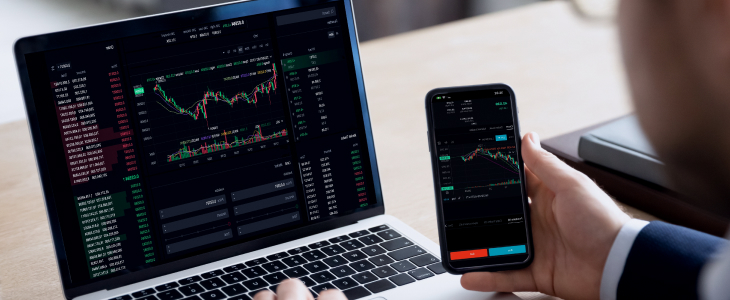
To make informed trading decisions, traders often rely on two main types of analysis: technical and fundamental analysis.
Technical Analysis
Technical analysis involves examining price charts and patterns to forecast future price movements. Traders use various tools such as indicators and chart patterns to identify trends and determine entry and exit points.
Fundamental Analysis
Fundamental analysis focuses on economic indicators, news events, and political factors that can affect currency values. Traders analyze economic reports, central bank policies, and geopolitical developments to make informed decisions based on the broader market context.
Developing a Trading Strategy
Having a solid trading strategy is crucial for success in Forex trading. Your strategy should encompass the following components:
- Market Analysis: Determine whether you’ll focus on technical or fundamental analysis or a combination of both.
- Risk Management: Set rules for how much of your capital you are willing to risk on each trade (typically suggested is 1% to 2%).
- Entry and Exit Rules: Define clear criteria for when to enter and exit trades based on your analysis and market conditions.
- Continuous Learning: Stay updated with market developments and continuously refine your strategy based on your experiences.
Conclusion
Forex trading offers exciting opportunities for profit, but it also comes with significant risks. Understanding the basics of currency pairs, market participants, trading mechanics, and analysis techniques can lay a solid foundation for your trading journey. As you embark on this path, remember that practice and continual education are essential for success. With dedication and the right approach, you can navigate the complexities of Forex trading and work towards achieving your financial goals.