
Understanding Forex Trading Meaning, Basics, and Strategies

Understanding Forex Trading: Meaning, Basics, and Strategies
Forex trading, also known as foreign exchange trading, involves the buying and selling of currencies on the foreign exchange market. Unlike other financial markets where stocks and commodities are traded, the forex market is uniquely characterized by its decentralization and global reach. This extensive network allows for trading to occur 24 hours a day, five days a week, providing numerous opportunities for traders worldwide. In the context of Forex trading, understanding the basics and frameworks is essential for both new and experienced traders. This article will explore the meaning of forex trading and its key components, including forex trading meaning Argentina Brokers, currencies, trading strategies, and risk management techniques.
What is Forex Trading?
Forex trading refers to the act of buying one currency while simultaneously selling another. Currencies are always traded in pairs, such as EUR/USD (Euro/US Dollar) or USD/JPY (US Dollar/Japanese Yen). The value of a currency pair fluctuates based on economic conditions, geopolitical factors, and market sentiment. Traders participate in forex trading to capitalize on these fluctuations, aiming to buy low and sell high, or sell high and buy low.
The Forex Market
The forex market is the largest financial market in the world, with a daily trading volume exceeding $6 trillion. This market operates through a global network of banks, financial institutions, and individual traders. Unlike stock markets, there is no centralized exchange for forex; instead, trades occur over the counter (OTC). This decentralized nature contributes to the market’s liquidity and accessibility for participants.
Currency Pairs Explained
In forex trading, currencies are listed in pairs to indicate their exchange rate. Each currency pair has a base currency (the first listed currency) and a quote currency (the second listed currency). For instance, in the EUR/USD pair, the Euro (EUR) is the base currency, and the US Dollar (USD) is the quote currency. The exchange rate reflects how much of the quote currency is needed to buy one unit of the base currency. Understanding how to read currency pairs is crucial for successful trading.

Types of Currency Pairs
Currency pairs are categorized into three main types:
- Major pairs: The most traded pairs involving major currencies, such as EUR/USD, USD/JPY, and GBP/USD.
- Minor pairs: Pairs that do not involve the US Dollar but include other major currencies, such as EUR/GBP and AUD/NZD.
- Exotic pairs: Less traded pairs that consist of one major currency and one currency from a developing economy, such as USD/TRY (US Dollar/Turkish Lira) or EUR/SEK (Euro/Swedish Krona).
Forex Trading Strategies
Successful forex trading often hinges on the development and implementation of effective strategies. Traders may adopt various strategies based on their risk tolerance, market conditions, and trading style. Common strategies include:
- Scalping: A short-term strategy that involves making numerous trades throughout the day to profit from small price movements.
- Day trading: Traders open and close positions within the same trading day, avoiding overnight risk.
- Swing trading: A medium-term strategy that aims to capitalize on price swings over several days or weeks.
- Position trading: A long-term strategy where traders hold positions for weeks, months, or even years, anticipating significant shifts in currency values.
Risk Management in Forex Trading
Risk management is a critical component of forex trading. Traders use various tools and strategies to mitigate potential losses, including:
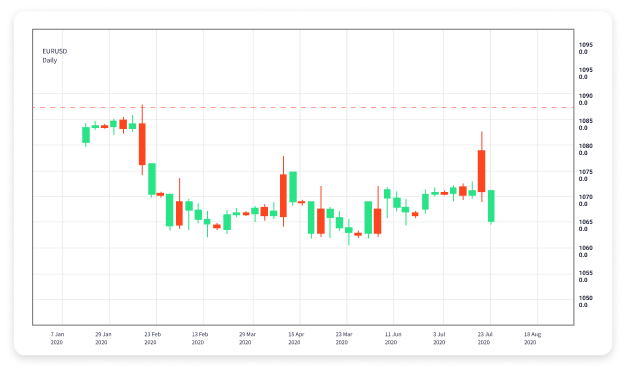
- Setting stop-loss orders: These orders automatically close a position when a currency reaches a specified price, limiting potential losses.
- Using take-profit orders: Similar to stop-loss orders, these automatically close a position once a desired profit level is reached, helping to secure gains.
- Diversification: Spreading investments across different currency pairs can reduce the risk associated with trading a single pair.
- Proper position sizing: Calculating the appropriate size of each trade based on account balance and risk tolerance is vital for preserving capital.
The Role of Leverage in Forex Trading
Leverage allows traders to control larger positions with a smaller amount of capital, consequently magnifying both potential profits and losses. While leverage can enhance trading outcomes, it also introduces significant risks. For example, a leverage ratio of 100:1 means that with $1,000, a trader can control $100,000 in currency. It is essential to use leverage judiciously and to understand the potential implications on your trading account.
The Importance of Analysis in Forex Trading
Analysis plays a vital role in forex trading and can be broadly categorized into two main types:
- Fundamental analysis: This approach involves studying economic indicators, interest rates, and geopolitical events that can influence currency values. Understanding how these factors affect supply and demand is invaluable for making informed trading decisions.
- Technical analysis: Technical traders use charts and past price data to identify trends and patterns. This method often employs indicators such as moving averages, Fibonacci retracements, and relative strength indicators to predict future price movements.
Conclusion
Forex trading offers a dynamic and exciting opportunity for participants in the global financial market. Understanding its meaning, principles, and strategies is crucial for navigating this complex environment. Whether leveraging the insights from Argentina Brokers or employing various trading strategies, traders must prioritize risk management and informed decision-making to achieve consistent success in forex trading. By continuously educating themselves and adapting to changing market conditions, traders can effectively participate in this vast market and work towards their financial goals.